All information on this page
comes from Earthship Biotecture. This page exists only to spread the word.
December 10, 2025
To the Distinguished Leaders of the United States:
President Donald J. Trump — President of the United States
Robert F. Kennedy Jr. — Secretary of Health and Human Services
Scott Turner — Secretary of Housing and Urban Development
Brooke Rollins — Secretary of Agriculture
Doug Burgum — Secretary of the Interior
Lee Zeldin — Administrator, Environmental Protection Agency
Gavin Newsom — Governor of State of California
Karen Bass — Mayor of City of Los Angeles
Elaine Culotti — Running for Governor of State of California
Dear Esteemed Leaders,
I write to you today with profound urgency regarding an opportunity that sits before our great nation—an
opportunity to revolutionize housing, strengthen American resilience, and restore our citizens'
connection to the land that has always defined us. This opportunity comes in the form of
Earthship Biotecture, a proven system of sustainable, self-sufficient housing developed
over five decades by visionary American architect Michael Reynolds.
At 79 years old and currently fighting stage 4 prostate cancer, Mr. Reynolds continues working with the
urgency of a man who understands that time is precious. His dream—to see Earthship homes produced at
scale, much like Henry Ford did with the Model T automobile—represents perhaps the most significant
advancement in affordable, disaster-resistant, and sustainable housing in American history.
Consider the devastating reality facing our fellow Americans: The Palisades and Eaton fires in January
2025 destroyed over 11,000 homes in Los Angeles County alone. Less than 10% have permits to rebuild
nearly a year later. Families remain displaced. Insurance payouts fall short. Traditional rebuilding
costs exceed $1 million for modest homes. Meanwhile, hurricane after hurricane ravages our Eastern
seaboard, and tornado alley continues to claim lives and property each spring.
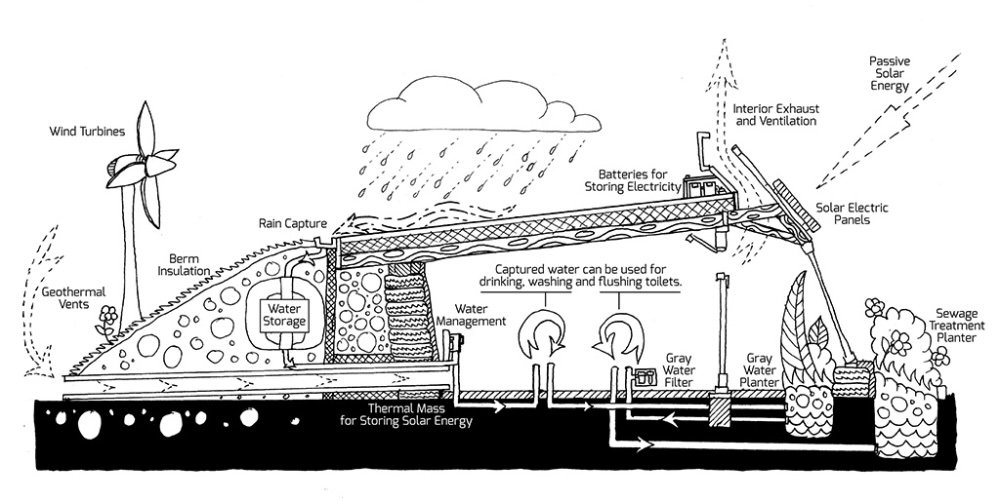
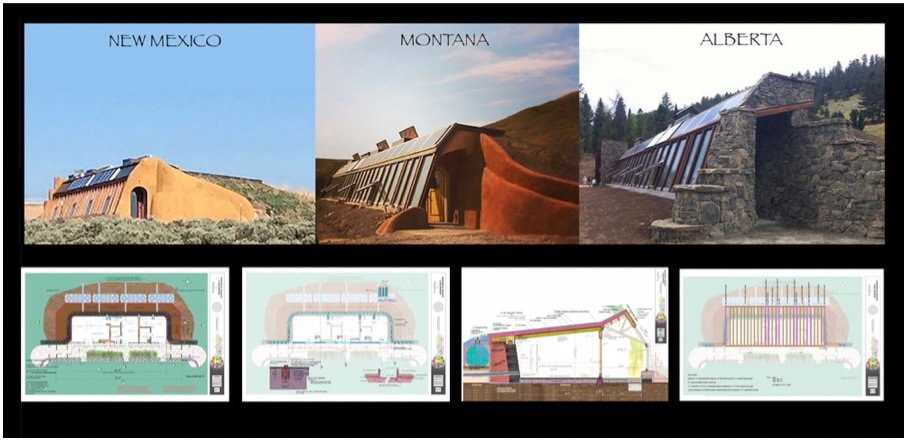
Earthship side-view architectural drawing — passive solar orientation, tire walls, and
integrated systems at a glance
Earthships offer a fundamentally different path forward.
These remarkable structures heat and cool themselves without utility bills through thermal mass and
passive solar design. They harvest their own water from rain and snow. They produce food year-round in
integrated greenhouses. They generate their own electricity from sun and wind. They treat their own
sewage without municipal infrastructure. And they are built largely from materials America throws
away—used automobile tires, glass bottles, aluminum cans—giving new purpose to our waste streams.
Most critically for disaster-prone regions: Earthships are built to endure. Their
rammed-earth tire walls, each weighing approximately 300 pounds when packed with soil, create structures
that can withstand earthquakes, hurricanes, and fires far better than conventional wood-frame
construction. Mr. Reynolds is currently developing tornado-resistant models specifically designed for
America's heartland.
I respectfully urge you to consider the following actions:
Secretary Turner (HUD): Explore pilot programs for Earthship communities serving
disaster survivors and veterans. Mr. Reynolds has already demonstrated success in Puerto Rico after
Hurricane Maria and in Haiti after the 2010 earthquake. A partnership with HUD could bring this proven
approach to communities devastated by the LA fires, hurricane victims across the Southeast, and tornado
survivors throughout the Midwest.
Secretary Rollins (Agriculture): The integrated food production systems within
Earthships align perfectly with USDA's mission to strengthen American food security. Consider supporting
research into how these built-in greenhouses could supplement rural food production and reduce
dependence on long supply chains.
Secretary Burgum (Interior): Many Earthship communities thrive on federal and state
lands in New Mexico. Expanding sustainable development testing sites on appropriate public lands could
accelerate innovation while protecting our natural heritage.
Administrator Zeldin (EPA): Earthships represent a practical solution to multiple
environmental challenges: they divert waste from landfills (especially the 2.5 billion tires stockpiled
in America), reduce energy consumption by up to 90% compared to conventional homes, and eliminate the
need for wasteful municipal water and sewage systems in appropriate locations.
Secretary Kennedy (HHS): The health benefits of Earthship living—constant access to
fresh food, clean air, natural light, and the psychological security of self-sufficiency—deserve
scientific study. Additionally, Mr. Reynolds has been vocal about holistic approaches to health in his
own cancer battle, believing deeply in the connection between our living environments and our wellbeing.
President Trump: You have spoken passionately about rebuilding America, about cutting
red tape that prevents innovation, and about putting American workers back to work. Earthship
construction creates jobs that cannot be outsourced—every home requires local labor, local materials,
and local expertise. A federal initiative to produce Earthships at scale would embody the manufacturing
renaissance you envision for our nation.
Governor Newsom: With all due respect, California has failed its residents. The
bureaucratic nightmare facing Palisades and Eaton fire survivors is unconscionable—less than 10% have
permits to rebuild nearly a year after losing everything. Your administration touts "the fastest debris
removal in history," yet families remain homeless while paperwork languishes. It is time to stop
celebrating clearing rubble and start celebrating people returning to homes. Earthship construction
methods could bypass many of the regulatory bottlenecks your state has created. Suspend the red tape.
Authorize pilot programs. Give your constituents a real path forward instead of press releases about
"progress" while they sleep in cars and crowd into relatives' spare rooms. The people of California
deserve bold action, not administrative excuses.
Mayor Bass: Los Angeles cannot continue business as usual. Your city approved just 620
rebuilding permits out of thousands of destroyed homes. Inspectors give conflicting guidance. Architects
report the building department's "answers change every day." Meanwhile, construction costs have doubled,
insurance falls short, and residents who once called LA home are simply walking away. This is not
recovery—this is managed decline. Earthship Biotecture offers a proven alternative: homes that can be
built quickly, resist future fires, and free residents from the utility grid that failed them. Will you
continue defending a broken system, or will you have the courage to embrace innovation? The displaced
families of Pacific Palisades and Altadena are watching, and history will judge whether you rose to meet
this moment or let bureaucracy bury their dreams along with their ashes.
Mr. Reynolds estimates his newest "Refuge" model Earthship could be leased for as little as $1,200 per
month with no utility bills—a genuine solution to America's affordable housing crisis. "If I had 100 of
these right now, they'd all lease in 24 hours," he has said. "No first and last, no utility bill. You
walk into a home that will absolutely take care of you, produce food, produce water, make you free from
all these crises."
His vision of an "assembly line" approach to Earthship production—standardized designs, trained
construction teams, streamlined permitting—could transform disaster recovery from a multi-year
bureaucratic nightmare into a rapid path back to normalcy for affected families.
The time has come for America to embrace this innovation. Michael Reynolds has dedicated his life to
solving problems that grow more urgent with each passing year. He has intentionally chosen not to patent
his designs, making them freely available to anyone willing to learn. The Earthship Academy has trained
over 5,000 students from around the world.
I urge you to investigate Earthship Biotecture, meet with Mr. Reynolds while he is still able to share
his wisdom, and consider how federal support could accelerate the adoption of this remarkable American
innovation. Find backers. Identify locations with like-minded communities willing to pioneer this
approach. And build.
For the survivors of the Palisades and Eaton fires. For hurricane victims on the East Coast. For families
in Tornado Alley who rebuild only to lose everything again. For veterans seeking independence and
purpose. For all Americans who dream of a home that takes care of them rather than consuming their
paychecks. For our children and grandchildren who will inherit whatever world we leave them.
The technology exists. The expertise exists. The need is desperate. What remains is the will to act.
Respectfully submitted,
Sean Kelley
A Concerned American Citizen In support of sustainable housing for all
👤 About Michael Reynolds: The Garbage Warrior
Michael E. Reynolds (born 1945) is an American architect who has spent over five decades developing what he
calls "Earthship Biotecture"—self-sufficient homes that work with nature rather than against it. Based in
Taos, New Mexico, Reynolds has been called the "Garbage Warrior" for his revolutionary use of discarded
materials in construction.
"My mentor is a tree. A tree takes care of itself. It doesn't need any infrastructure. Its leaves go up and
get energy. Its roots go down and get nutrients and water. It sits there and takes care of itself by
encountering the phenomena of the planet. I want to be like a tree."
— Michael Reynolds
1945 — Born in Louisville, Kentucky
1969 — Graduated from University of Cincinnati School of Architecture
1971 — Thesis published in Architectural Record
1972 — Built first recycled material house ("Thumb House")
1990 — Lost architecture license after disputes with clients; began
17-year battle
2007 — License reinstated; documentary "Garbage Warrior" released
2007 — Helped pass New Mexico Sustainable Development Testing Sites
Act
2020s — Diagnosed with stage 4 prostate cancer; continues working and
teaching
2024 — Completed first "Refuge" model Earthship—his vision for mass
production
Reynolds grew up watching his father collect and reuse materials—a habit that would later inspire his
revolutionary approach to construction. After graduating from architecture school, he was deeply influenced
by television reports about growing trash problems and the lack of affordable housing in America.
🏆 Current Health & Legacy
Reynolds has been fighting stage 4 prostate cancer holistically and continues to work with remarkable
energy. He expresses a deep drive to serve the universal need for sustainable housing before his time
runs out. "The world is my family," he says, "and I can't be happy knowing I'm happy and others are
not."
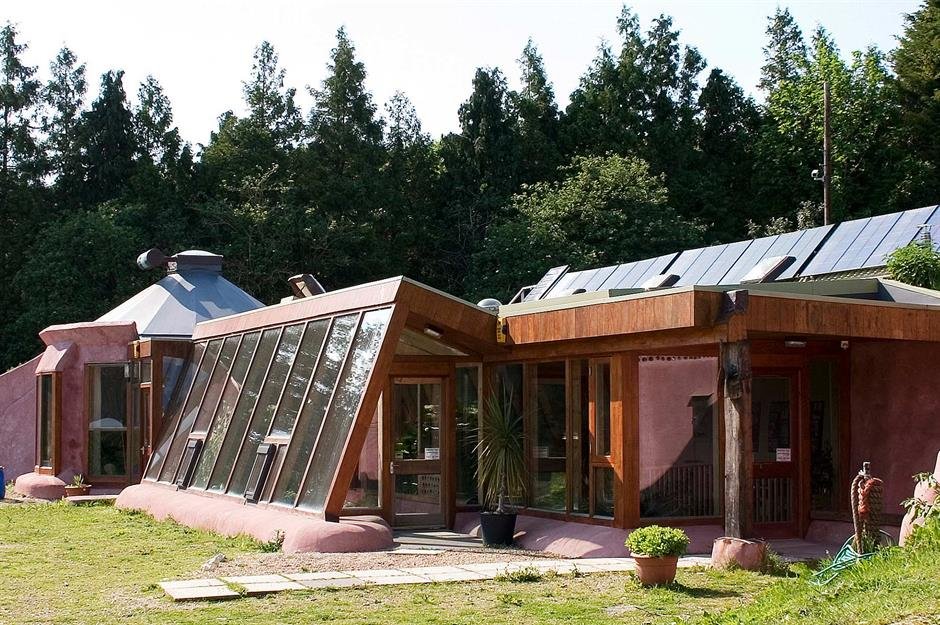
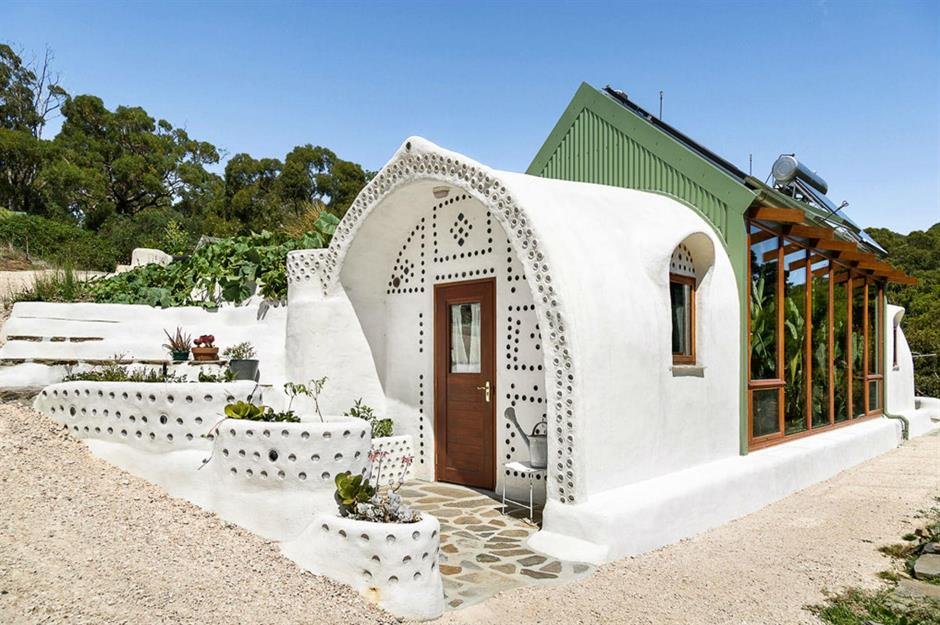
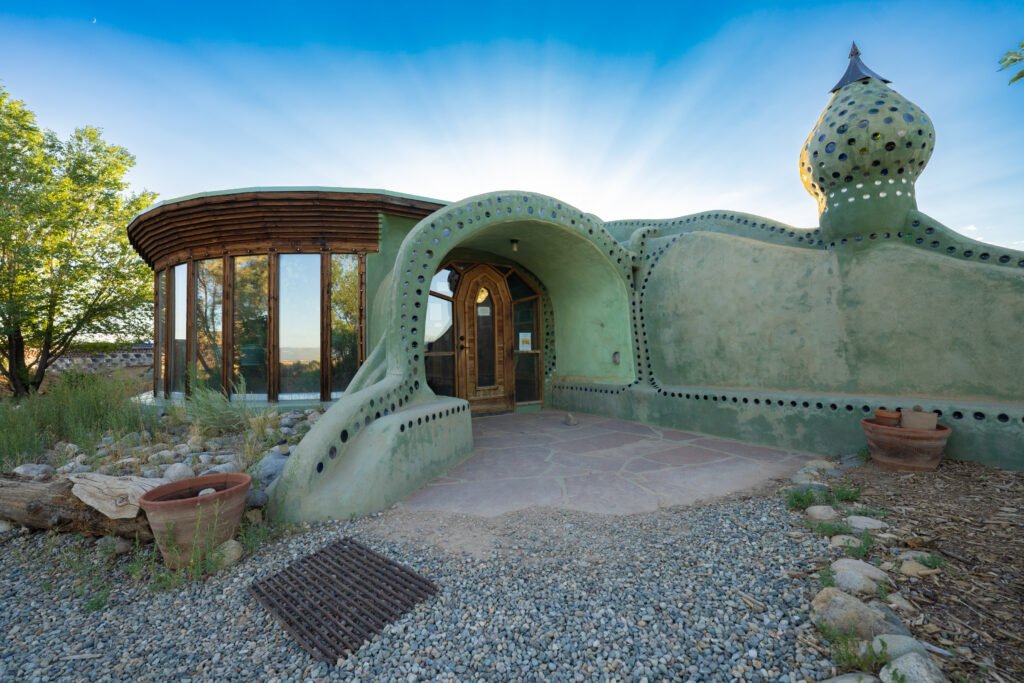
Earthship exterior — the distinctive south-facing glass wall and earth-bermed profile that
defines the designThe Earthship community in Taos, New Mexico — 630 acres of off-grid homes that have operated for
decades
🔧 The Six Principles of Earthship Design
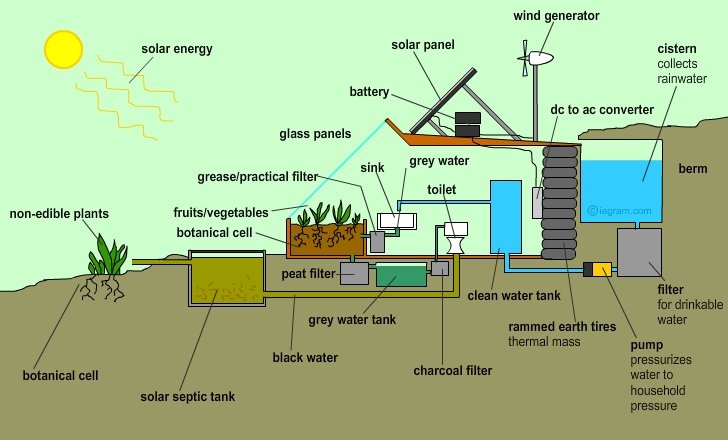
Every Earthship is built according to six fundamental design principles that work together to create a
completely self-sufficient living environment:
🌡️ 1. Thermal Mass Heating & Cooling
Massive walls of earth-packed tires absorb solar heat during the day and release it at night,
maintaining stable 70°F temperatures year-round without furnaces or air conditioning.
☀️ 2. Solar & Wind Electricity
Photovoltaic panels and occasional wind turbines generate all electrical needs. Earthships require
only 25% of the electricity of conventional homes due to efficient design.
💧 3. Water Harvesting
Rain and snowmelt are collected from the roof into cisterns, filtered for drinking quality, and used
four times throughout the home before final treatment.
♻️ 4. Contained Sewage Treatment
Greywater flows through interior botanical cells (planters) that clean and filter it for toilet
flushing. Blackwater goes to exterior treatment cells supporting landscaping.
🍅 5. Interior Food Production
Integrated greenhouses along the south-facing windows allow year-round growing of food including
bananas, figs, tomatoes, and leafy greens—even in cold climates.
🛞 6. Recycled & Natural Materials
Used automobile tires form the structural walls. Glass bottles create decorative interior walls.
Aluminum cans provide infill. Adobe and earthen plasters finish surfaces naturally.
90%Energy Savings vs. Traditional Homes
800-900Tires Per Home
70°FYear-Round Temperature
$0Monthly Utility Bills
Earthship architectural drawings — how the six systems integrate into a single self-sufficient
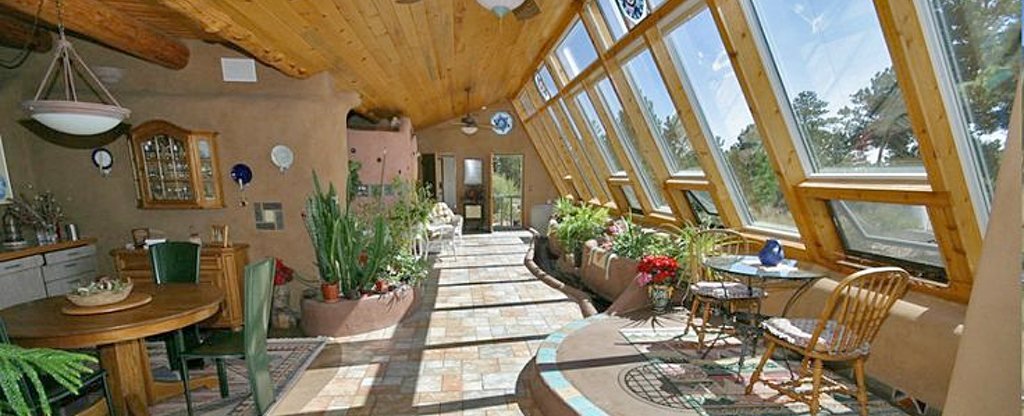
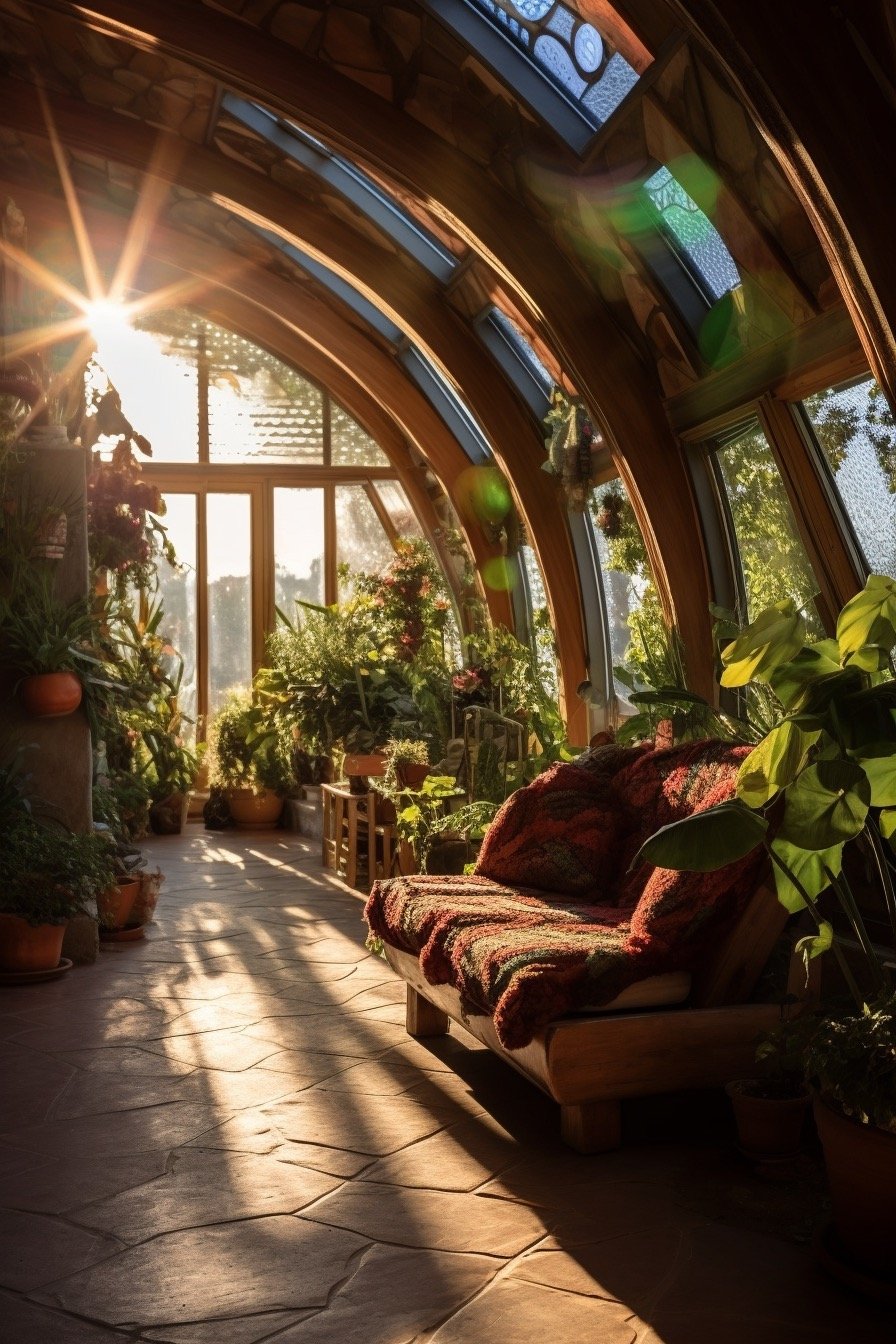
structureInside an Earthship — natural light floods through south-facing glass, botanical planters line
the greenhouse corridor, and the earthy aesthetic reflects the materials used to build it
🏗️ How Earthships Work: The Science of Thermal Mass
The Tire Wall System
The structural walls of an Earthship are formed with used automobile tires packed tightly with earth. Each
tire becomes a "thermal mass brick" weighing approximately 300 pounds. These massive walls serve multiple
purposes:
Structural Support: Tires are staggered like bricks, creating load-bearing walls that
need no traditional foundation
Thermal Storage: The dense earthen mass absorbs temperature and radiates it slowly,
creating stable indoor conditions
Earth Connection: When bermed with soil on three sides, the walls connect to the
constant 55°F temperature of deep earth
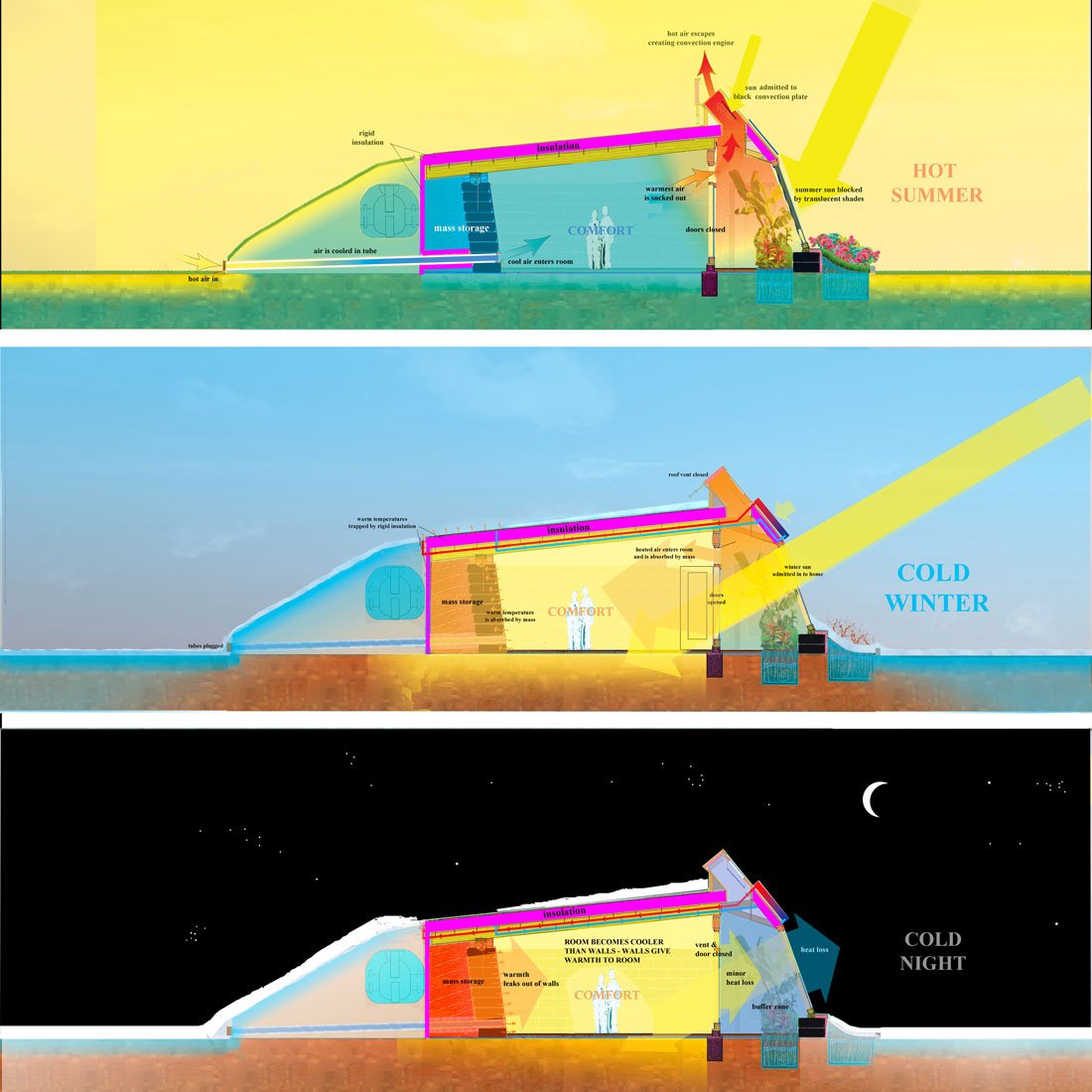
📐 Cross-Section Concept: How Temperature Regulation Works
Cross-section drawing — earth-bermed tire walls, south-facing glass, and how the structure
regulates temperature passively
                    ☀️ SUN (South-Facing)
                         ↓
    ┌─────────────────────────────────────────────┐
    │          SLANTED GLASS WINDOWS              │ ← Solar gain in winter
    │              (Greenhouse)                   │   Shaded in summer
    └─────────────────────────────────────────────┘
                         ↓
    ╔═══════════════════════════════════════════════════════════════╗
    ║                                                               ║
    ║  ┌─────────┐                              ┌─────────────────┐ ║
    ║  │ COOLING │→→→→→→ Cool Air →→→→→→→→→→→→→│   LIVING SPACE  │ ║
    ║  │  TUBE   │      (55°F from             │    (Stable at   │ ║
    ║  │(through │       earth)                │     ~70°F)      │ ║
    ║  │ berm)   │                             │                 │ ║
    ║  └─────────┘                              └────────┬────────┘ ║
    ║                                                    │          ║
    ║      EARTH BERM (Thermal Mass)                    ↑          ║
    ║   ┌──────────────────────────────┐         Hot air rises     ║
    ║   │  ████ TIRE WALL ████████████│         through skylight   ║
    ║   │  ████ (300 lbs each) ███████│                ↑          ║
    ║   │  ████████████████████████████│    ┌──────────┴─────────┐ ║
    ║   │  Stores heat in winter       │    │ OPERABLE SKYLIGHT  │ ║
    ║   │  Absorbs heat in summer      │    │   (Ventilation)    │ ║
    ║   └──────────────────────────────┘    └────────────────────┘ ║
    ║                                                               ║
    ╚═══════════════════════════════════════════════════════════════╝
         ↑                                              ↑
    INSULATION                                    FOOD GROWING
    (prevents heat                                 IN GREENHOUSE
    loss to deep earth)
Natural Ventilation: The "Convection Engine"
Earthships use natural physics to cool themselves without air conditioning:
Cooling Tubes: 30-foot pipes extend from the exterior, through the earth berm, into the
living space. Outside air is cooled to approximately 55°F as it passes through the constant-temperature
earth.
Stack Ventilation: Hot air naturally rises and escapes through operable skylights in
the roof
Cross-Flow: Cool air entering through tubes pushes warm air out the top, creating
continuous natural air conditioning
Seasonal solar diagram — the roof overhang angle is calculated so low winter sun heats the home
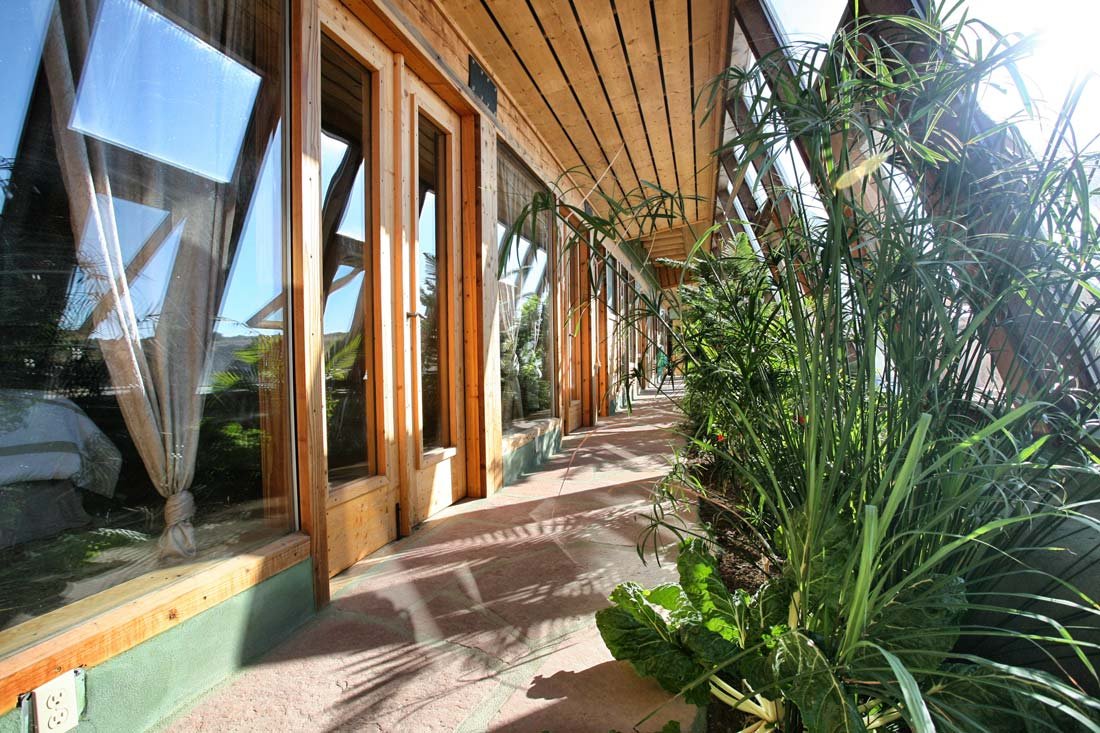
while high summer sun is blocked naturallyInterior greenhouse of an Earthship—growing food year-round while providing thermal buffer
between outside and living spaces
💧 Water Systems: Every Drop Used Four Times
Earthships treat water as the precious resource it is, using every drop multiple times before it leaves the
system:
The Four Uses of Water in an Earthship
Potable Use: Rainwater is collected, filtered, and used for drinking, cooking, and
bathing
Greywater Irrigation: Used water from sinks and showers flows through interior
botanical planters that clean it while growing food
Toilet Flushing: Cleaned greywater is collected and pumped to toilets—40% of
household water typically used for flushing is now recycled!
Blackwater Treatment: Toilet water flows to exterior rubber-lined botanical cells
supporting outdoor landscaping
This closed-loop system dramatically reduces water consumption while eliminating dependence on municipal
water supplies—crucial for disaster resilience and rural locations.
Interior botanical cells — these planters filter greywater from sinks and showers while growing
food. Form and function, one system.Inside an Earthship — recycled glass bottles set in adobe create colorful interior walls. Every
material has a purpose.
🆘 Disaster Relief: Proven Solutions for Crisis Recovery
Earthships have been deployed successfully in disaster zones around the world, demonstrating their value as
resilient, quickly-deployable housing solutions:
Haiti (2010)
After the devastating earthquake, Reynolds and his team built earthquake-resistant Earthship homes in just
four days using locally-found materials. Forty locals, ranging from ages 4 to 50, participated in
construction—learning skills they could apply to future building. Reynolds noted: "They had nothing to do.
They were all eager to learn, and it turns out all the skills we could do, they could do."
Puerto Rico (2017-Present)
Following Hurricane Maria, which left nearly half a million people without power for months, Earthship
Biotecture partnered with local residents to build hurricane-resistant structures. The project known as
"Villabonuco" consists of five connected geodesic domes with integrated water catchment systems. Earthship
homes are specifically designed to withstand hurricanes and earthquakes—perfect for an island that regularly
faces both threats.
Andaman Islands (2004)
After the Boxing Day tsunami, Reynolds and his team traveled to the Andaman Islands to teach local
communities Earthship construction techniques, providing both shelter and skills for long-term resilience.
Why Earthships for LA Fire Survivors?
The January 2025 Palisades and Eaton fires destroyed over 11,000 homes. Less than 10% have permits to
rebuild nearly a year later. Traditional rebuilding costs exceed $1 million per home. Insurance often
falls short.
Earthships offer: Fire-resistant construction • No utility
dependence • Lower long-term costs • Self-sufficiency during future emergencies
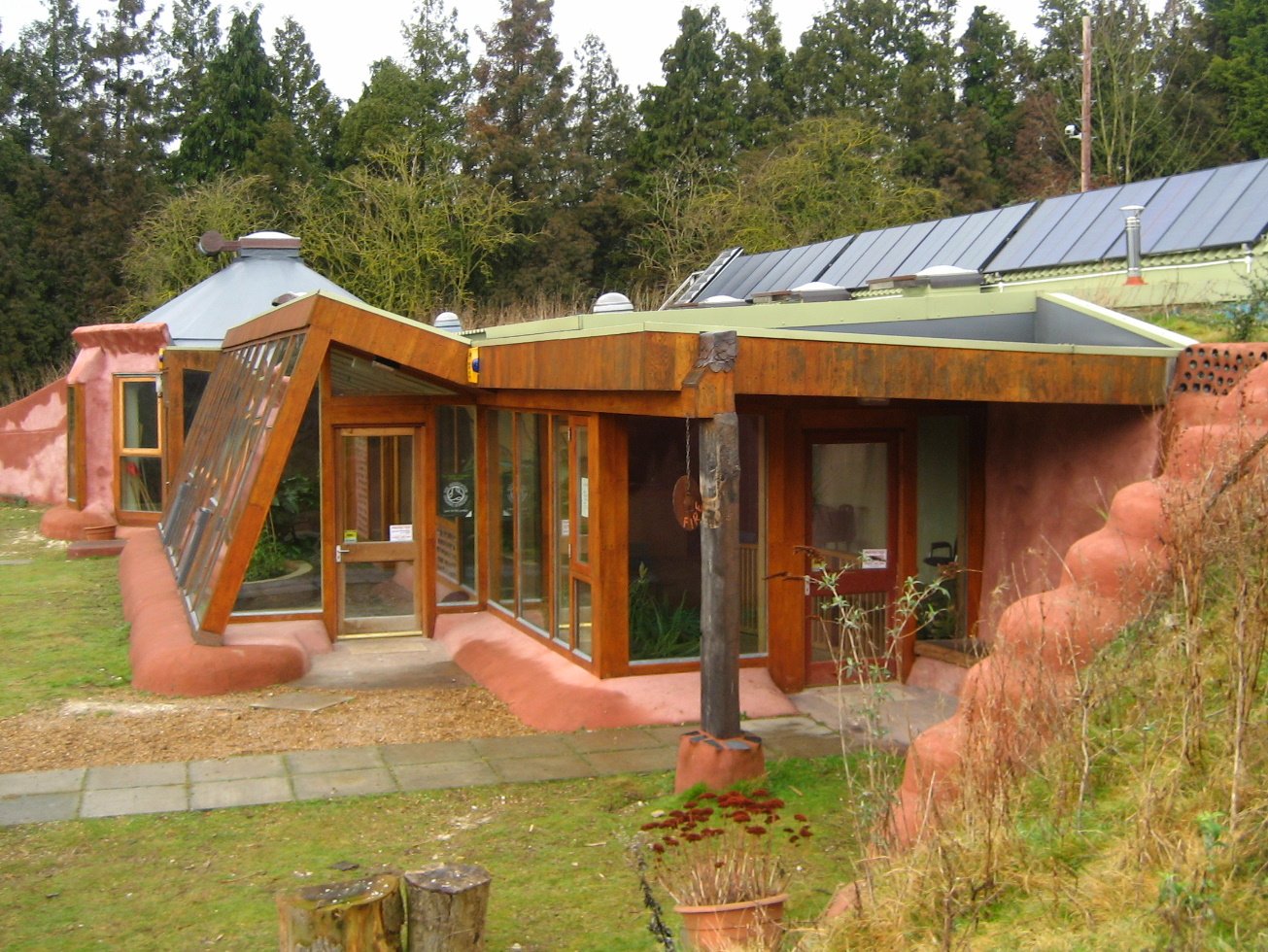
Earthship construction — rammed-earth tire walls are naturally fire-resistant and can withstand
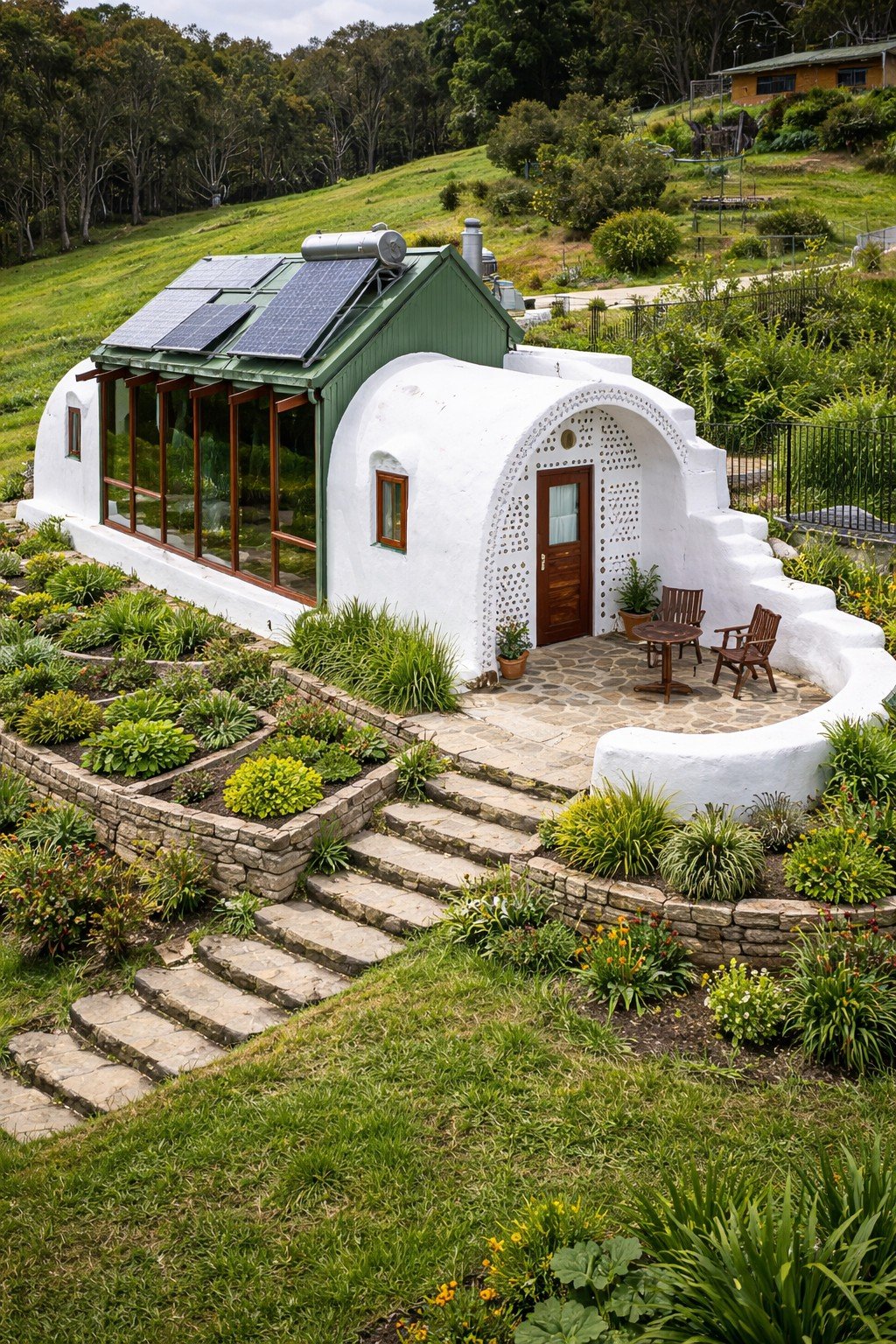
earthquakes and high windsAn Earthship blends into the landscape rather than fighting it — bermed into the earth for
thermal stability and structural strength
🏠 The Refuge: Reynolds' Vision for Mass Production
After 55 years of experimentation, Michael Reynolds has created what he hopes will become his "Model T"—the
Refuge Earthship. Unlike Henry Ford's invention of transportation, this is a "machine of
sustenance" designed for mass production.
The Refuge Model Features
Simplified Design: Standard window sizes, universal materials, accessible
construction techniques
Lower Cost: The economy model, designed to be more affordable than previous
Earthship designs
Core Structure: A complete living space that can be decorated and built onto over
time
All Six Principles: Fully equipped for heating/cooling, power, water, sewage, and
food production
Rapid Build: Designed for construction within months rather than years
The first official Refuge was completed in March 2024—a 1,600 square foot single-family home with 2 bedrooms
and 2 bathrooms. Reynolds envisions these homes being leased for as little as $1,200 per month with zero
utility bills.
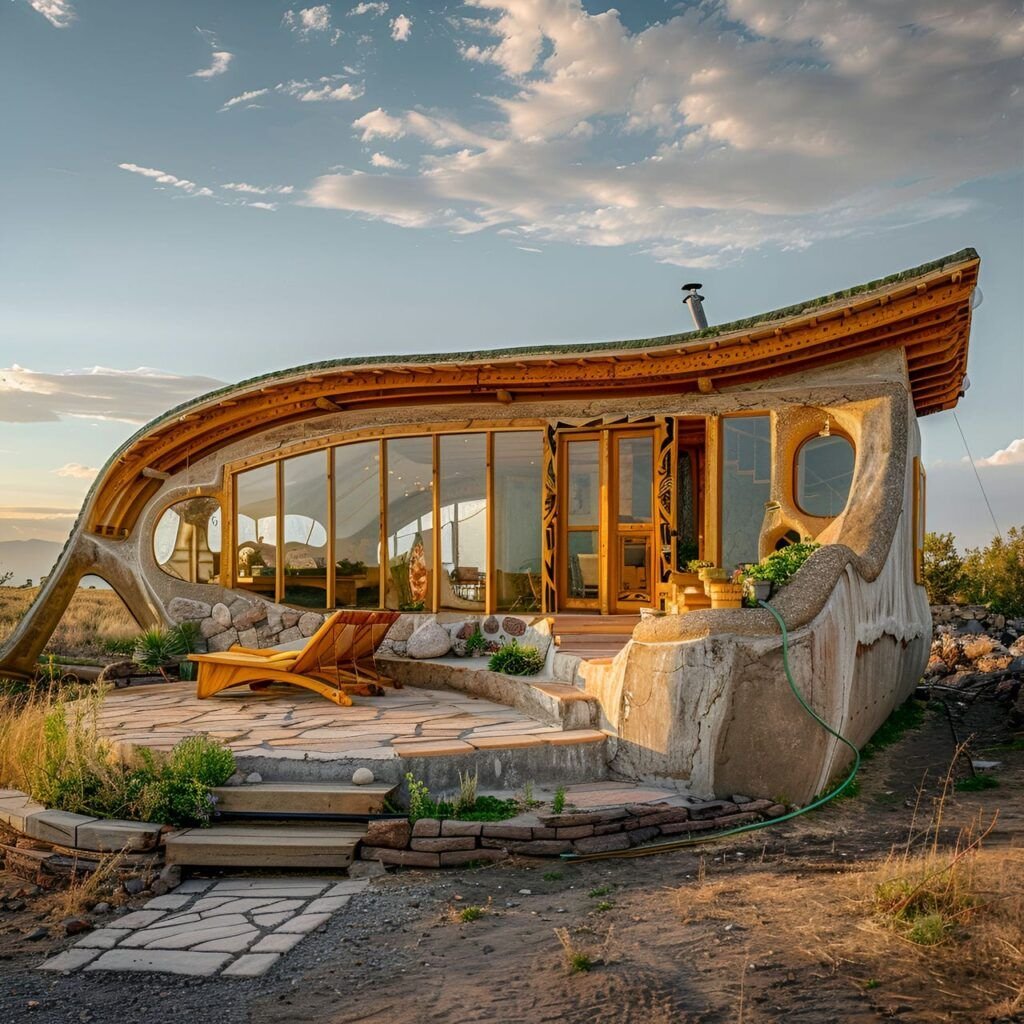
The Refuge model — Reynolds' "Model T" for sustainable housing. Simplified, standardized, and
designed to be built anywhere at scale.
"This is how we'll solve the housing crisis. I'll build it all over the world."
— Michael Reynolds, on the Refuge model
Reynolds has intentionally chosen not to patent his Earthship designs, making them freely available to anyone
willing to learn. Construction drawings are available for purchase, and the Earthship Academy has trained
over 5,000 students from around the world in hands-on building techniques.
🎬 Learn More: Videos & Resources
Garbage Warrior Documentary (2007)
The award-winning documentary that brought Earthships to worldwide attention, following Reynolds'
decades-long battle to build sustainable homes and change building codes.
The Refuge Earthship Walkthrough (2024)
Michael Reynolds explains the systems of the newest Refuge model, demonstrating how all six design principles
come together in this economy Earthship.
Inside the Off-Grid Earthship Community in New Mexico (2025)
Peter Santenello along with Mike Reynolds takes you on tour of New Mexico's earthship community. The
off-grid, ultra-efficient homes creatively designed from the most basic materials.
Visitor Center: 2 Earthship Way, Tres Piedras, NM 87577
Documentary Streaming: Available on Netflix, Amazon Prime Video
💰 Costs & Practical Considerations
Building Costs
Earthship construction costs vary significantly based on size, location, complexity, and how much work the
owner performs themselves:
Professional Build: $200-400 per square foot (comparable to conventional housing)
Earthship Biotecture Built: ~$225 per square foot
DIY with Sweat Equity: Some owners have built for under $10,000 by doing all labor
themselves
Refuge Model: Designed as the lowest-cost option with simplified techniques
The Key Difference: No Operating Costs
While initial construction costs may be similar to conventional homes, Earthships have zero
utility bills. No electric bills. No gas bills. No water bills. No sewage fees. Over a
30-year mortgage, these savings can amount to hundreds of thousands of dollars.
Challenges to Consider
Building Codes: Many jurisdictions lack codes for alternative construction; permits can
be challenging
Labor Intensive: Pounding tires is physically demanding; each tire takes 30-60 minutes
Climate Adaptation: Designs developed in New Mexico may need modification for humid or
cloudy climates
Financing: Traditional banks may be unfamiliar with Earthship construction
Resale: The unique nature can make resale more challenging (though advocates argue this
is changing)
Success Stories
Despite challenges, thousands of Earthships exist worldwide—from New Mexico to Scotland, Australia to
Belgium, Puerto Rico to South Africa. The Earthship community in Taos sits on 630 acres and has operated for
decades, proving the long-term viability of the concept.
📞 Contact Information for Government Officials
Citizens who share this vision can contact the following offices to express support for sustainable housing
initiatives:
The Visitor Center offers self-guided tours daily from 10am-4pm ($9 per person) and
guided tours Thursday-Sunday at 3pm ($22 adults, $13 children). Nightly rentals are available to experience
Earthship living firsthand.